How Assessment Evidence Should Guide the Next Lesson
Tutors make better next-session decisions when assessments tie to specific topics. Here is how to close the loop between checking and teaching.
GrowWise · Team · Last updated
The quiz is graded. The next lesson still starts on page 42 because that is what the packet says.
That moment is where tutoring either becomes personalized or becomes scheduled reading help. The difference is not tutor talent. It is whether assessment results change the plan.
Assessments should change the plan, not decorate the file
Many centers assess regularly but teach sequentially anyway. The data goes into a folder. The tutor opens the next worksheet because everyone else in the cohort is there.
Evidence-guided teaching flips the order:
- What was the objective for the last session?
- What did the check show the student can and cannot do?
- Does the calendar advance, pause, or branch?
Without those three steps, you are measuring without closing the loop.
Tag evidence to topics, not just dates
"A student got 7/10" is weak guidance. "Missed two-step equations but solid on one-step" is a lesson plan.
Topic tags let directors see patterns too:
- A tutor consistently advancing with low evidence
- A cohort stuck on the same subskill three weeks in a row
- A program where homework scores look fine but exit tickets do not
That visibility connects directly to what topic-level mastery tells you that grades cannot.
A practical next-lesson flow for tutors
Open with one targeted warm-up from yesterday's gap, not a generic review sheet.
Reteach minimally with a different representation (visual, verbal, worked example) instead of repeating the same explanation louder.
Recheck with two items on the gap skill before new content.
Advance only when evidence clears the bar your program defines (often 80% on targeted items or two consecutive successes).
This takes ten to fifteen minutes and saves hours of relearning later.
Director guardrails that help tutors
Academic directors should define:
- Which topics require evidence before marking complete
- What "advance" means numerically
- When to pull a student off the cohort calendar for a side path
Clear guardrails reduce tutor guilt about "falling behind." They replace gut feel with program standards.
Where this breaks without tooling
Spreadsheets can list scores. They rarely tie scores to next calendar rows automatically. Tutors re-enter decisions every session.
Instructional systems that connect pacing, items, and mastery flags remove duplicate work. Tutors spend time teaching, not reconstructing what last week's PDF meant.
For a tutor-facing workflow article, read how to turn assessment results into the next lesson plan.
Parent trust follows the loop
Parents notice when each session clearly builds on the last. They also notice when sessions feel random despite paying for a structured program.
Showing that you adjust from evidence is one of the strongest renewal arguments you have. It pairs with the communication frame in what parents actually need in a student progress report.
Pilot this behavior before you scale it
If you are testing new software, measure whether tutors actually change plans from data. How to run a tutoring technology pilot with clear success metrics includes metrics for that behavior.
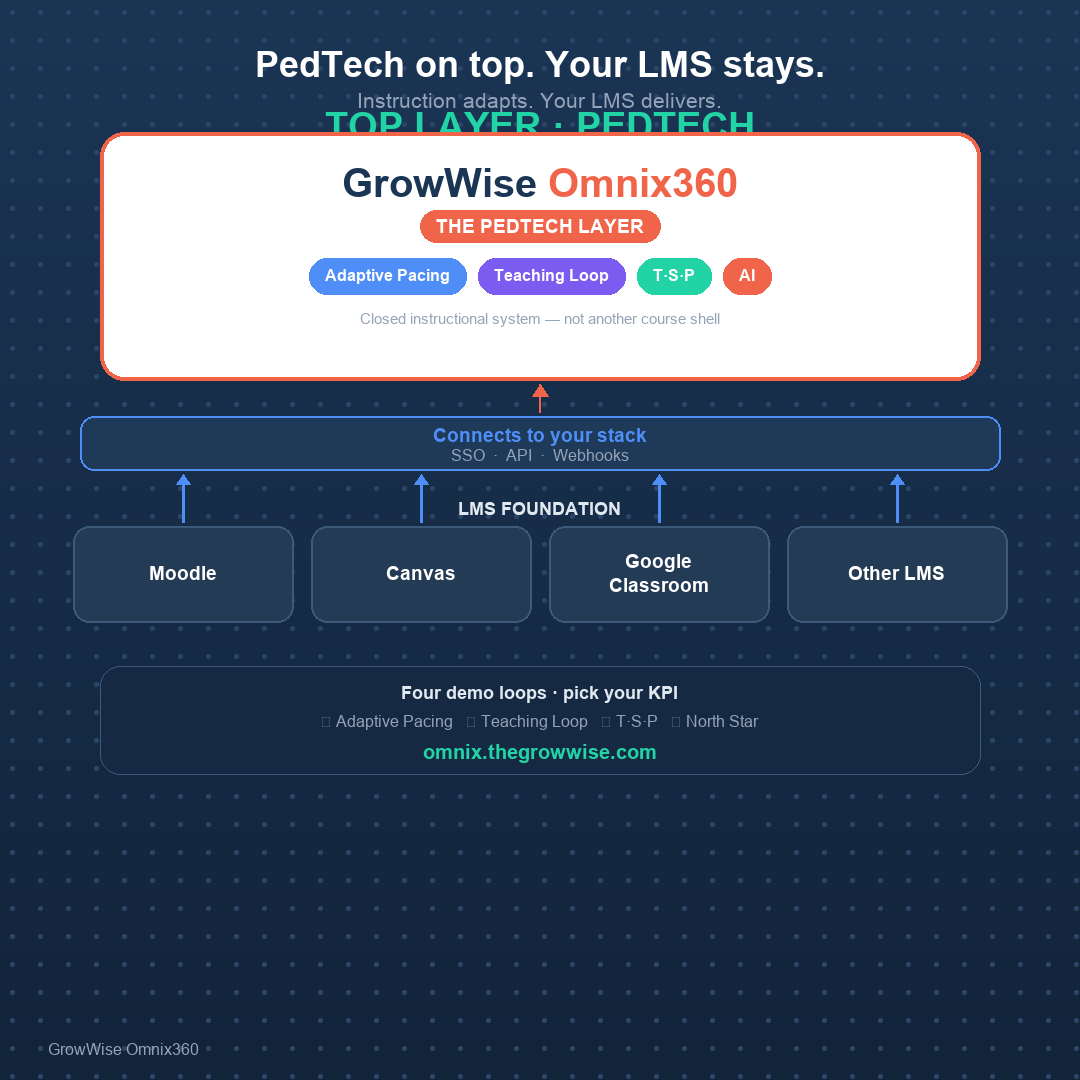
Illustrative only. Your workspace reflects your curriculum and roster.
Related reading
- How to turn assessment results into the next lesson plan
- What topic-level mastery tells you that grades cannot
- Why tutor session notes are not enough to measure student mastery
- Closed-loop pacing from a curriculum PDF
Book a live demo to walk through assessment-to-pacing flow with your curriculum.
Frequently asked questions
- How should tutors use assessment results in the next session?
- Start the next lesson from the smallest skill gap the assessment exposed, reteach with a new example, then recheck with one or two targeted items before advancing the pacing calendar.
- What is a closed-loop assessment in tutoring?
- A closed loop means the same topic tagged on the calendar is the same topic assessed, and the result automatically informs whether the next planned topic should wait.
- How often should tutoring centers assess during a unit?
- Short checks every session or every other session beat one large unit test for guiding daily tutoring, because tutors can adjust before misconceptions compound.
- Should tutors skip ahead if a student scores high on a pre-test?
- Only when missed items are clearly unrelated gaps or noise. High scores with pattern misses on one subskill still need targeted work, not a calendar skip.
Ready to prove pacing alignment in one program?
Start with the pilot playbook, then scope one program with our team, pricing comes after the scorecard.