What Topic-Level Mastery Tells You That Grades Cannot
A B average can hide missing prerequisites. Topic-level mastery shows what a student actually learned before you move the class on to the next unit.
GrowWise · Team · Last updated
The gradebook said fine. The next unit proved otherwise.
Every tutoring director has seen this student: polite, attends sessions, homework mostly done, quiz average in the low B range. Then fractions end and word problems begin, and the whole pattern falls apart. The grade was never lying on purpose. It was just summarizing too much.
Grades answer a report card question
Grades are useful for transcripts, billing conversations, and high-level progress. They compress weeks of work into one symbol. Compression is the problem when you are trying to decide what to teach tomorrow.
A single percentage mixes:
- Skills the student truly owns
- Skills they guessed through on partial credit
- Skills never assessed because the unit moved on
For a tutor planning the next hour, that mix is noise.
Topic-level mastery answers a teaching question
Topic-level mastery asks a narrower question: Can this student demonstrate this specific skill right now?
Examples tutors recognize immediately:
- Can they factor linear expressions without hints?
- Can they identify main idea vs supporting detail in grade-level text?
- Can they translate a word problem into an equation?
When mastery is tracked per topic, you see gaps while there is still time to reteach. When only grades exist, gaps show up as "sudden struggle" two units later.
For a primer on gap language, see what are learning gaps.
Why this matters more in tutoring than in a single classroom
In a school classroom, one teacher sees the same students daily and adjusts informally. In tutoring, sessions are shorter, tutors rotate, and parents expect visible progress per dollar spent.
If mastery is not explicit:
- Substitute tutors repeat content the student already knows
- Or they advance because the calendar says so, not because evidence says so
- Parents hear "doing well" until a benchmark test contradicts months of summaries
Topic-level clarity is how you earn renewals with data instead of reassurance.
What mastery evidence looks like in practice
Mastery does not require endless testing. It requires aligned evidence:
- A short exit ticket tied to the day's objective
- A problem type checklist for the unit
- A standard-linked item bank, not one generic quiz score
The evidence should feed forward. How assessment evidence should guide the next lesson explains that loop from the tutor's side.
Grades vs mastery for parent conversations
Parents understand letter grades. They also understand plain English about skills:
- "Alex can solve single-step equations consistently."
- "Alex is still building fluency with multi-step word problems."
That conversation builds trust. A single average does not.
When you are designing what parents see, pair this article with what parents actually need in a student progress report.
Session notes are not mastery data
Tutors often write "good session" or "needs practice." Notes help continuity. They do not prove learning. Why tutor session notes are not enough to measure student mastery goes deeper on that distinction.
For private school leaders
Division heads often need mastery views that roll up by section while respecting teacher judgment. Letter grades stay for transcripts. Topic evidence drives intervention meetings, pacing adjustments, and accreditation stories about outcomes.
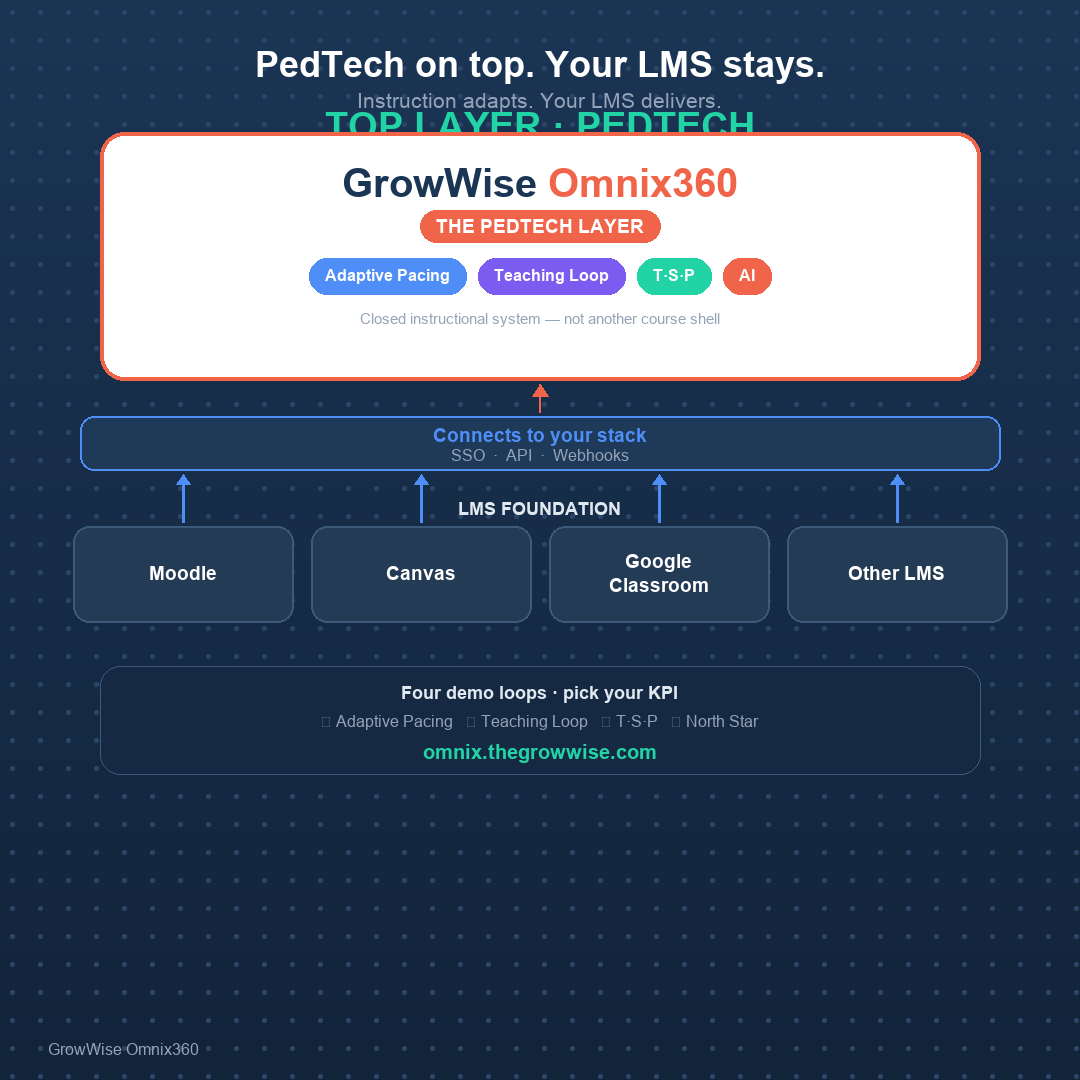
Illustrative only. Your workspace reflects your curriculum and roster.
Related reading
- Why tutor session notes are not enough to measure student mastery
- How assessment evidence should guide the next lesson
- What parents actually need in a student progress report
- Pacing and mastery signals for tutoring centers
Explore features or book a live demo to see topic-level mastery with your program map.
Frequently asked questions
- What is topic-level mastery in tutoring?
- Topic-level mastery tracks whether a student can demonstrate specific skills or concepts, not just whether they earned a passing average on a mixed assignment or unit test.
- Why are grades not enough for tutoring centers?
- Grades blend homework, participation, and partial credit. They can look fine while a student still cannot solve the core problem type you need for the next unit or exam.
- How is mastery different from completion?
- Completion means content was covered. Mastery means there is evidence the student can apply it, usually from an assessment tied to that topic.
- What should private schools track alongside letter grades?
- Track standard or topic evidence, reteach flags, and pacing alignment so teachers know who needs support before report cards freeze the narrative.
Ready to prove pacing alignment in one program?
Start with the pilot playbook, then scope one program with our team, pricing comes after the scorecard.