LMS vs Instructional Intelligence for Tutoring Centers and Private Schools
A traditional LMS stores courses and grades. Instructional intelligence connects pacing, mastery evidence, and teacher-facing signals. How to choose.
GrowWise · Team · Last updated
Short answer: An LMS stores courses, assignments, and grades. Instructional intelligence connects curriculum pacing, topic-level mastery evidence, and teacher-facing intervention signals so leaders can act before the term ends. You may need both: the LMS for delivery, instructional intelligence for whether teaching is on plan.
If you run a tutoring center or a private school, you have probably sat through at least one LMS demo. The pitch is polished: courses, quizzes, gradebook, maybe a parent portal. Then the school year starts and instructional leaders are back in spreadsheets trying to answer a harder question: Is teaching actually happening according to plan?
What an LMS is built to do
A learning management system is good at storage and delivery. It gives you a place to put materials, collect submissions, and record scores. For a single classroom with one teacher who knows every student, that can be enough.
For a tutoring organization with rotating tutors, or a private school with multiple sections of the same course, an LMS often becomes a record of what was assigned, not a picture of what was learned, where, and on schedule.
That distinction matters when a director tries to compare two algebra groups or two franchise locations. The gradebook shows outcomes. It rarely shows pacing drift three weeks before the unit test.
What instructional intelligence adds
Instructional intelligence connects three layers that are usually separate:
- Curriculum and pacing tied to a real calendar, not a folder structure.
- Assessment evidence at topic or standard level, not just a single percentage.
- Teacher-facing signals about who needs support before parents lose confidence.
The goal is not more dashboards for their own sake. The goal is a closed loop: plan, teach, check evidence, adjust, repeat. Leaders see risk while there is still time to intervene.
If you want a plain-language definition of the category, start with what is Omnix360 instructional intelligence.
A simple comparison for operators
| Question you ask every month | Typical LMS | Instructional intelligence |
|---|---|---|
| What did we assign? | Yes | Yes |
| What grades did we record? | Yes | Yes |
| Are all tutors on the same week of the plan? | Rarely | Yes |
| Which topics lack evidence before we move on? | Rarely | Yes |
| Which students are at risk before renewal season? | Sometimes late | Early, by topic |
This is why "we already have an LMS" is not the same as "we can see instructional quality across sites."
Where tutoring management software fits
Many centers first buy tutoring management software for scheduling, CRM, and billing. That stack solves operations. It still may not solve instructional consistency, which is what parents pay tuition for.
The three-way comparison matters when you are budgeting one platform line item. See tutoring management software vs LMS vs instructional intelligence for a decision frame by organization size.
What private schools should pressure-test in demos
Private school leaders often need SSO, role-based access, and audit-friendly reporting. Ask vendors to show:
- Cross-section pacing for the same course outline
- Standard or topic evidence, not only letter grades
- How teachers see at-risk learners without exporting CSV files
If the demo stays at "upload your PDF here," you may be buying storage again.
How to choose without a six-month mistake
You do not need the perfect label on day one. You need clarity on the job:
- If the job is content delivery and grades: an LMS may suffice.
- If the job is consistent quality across tutors, locations, or sections: you need pacing plus mastery evidence in one place.
- If the job is proving progress to parents before churn: you need topic-level visibility, not a portal that only shows attendance and averages.
Run a short pilot with measurable instructional outcomes, not just login counts. How to run a tutoring technology pilot with clear success metrics walks through sizing that test.
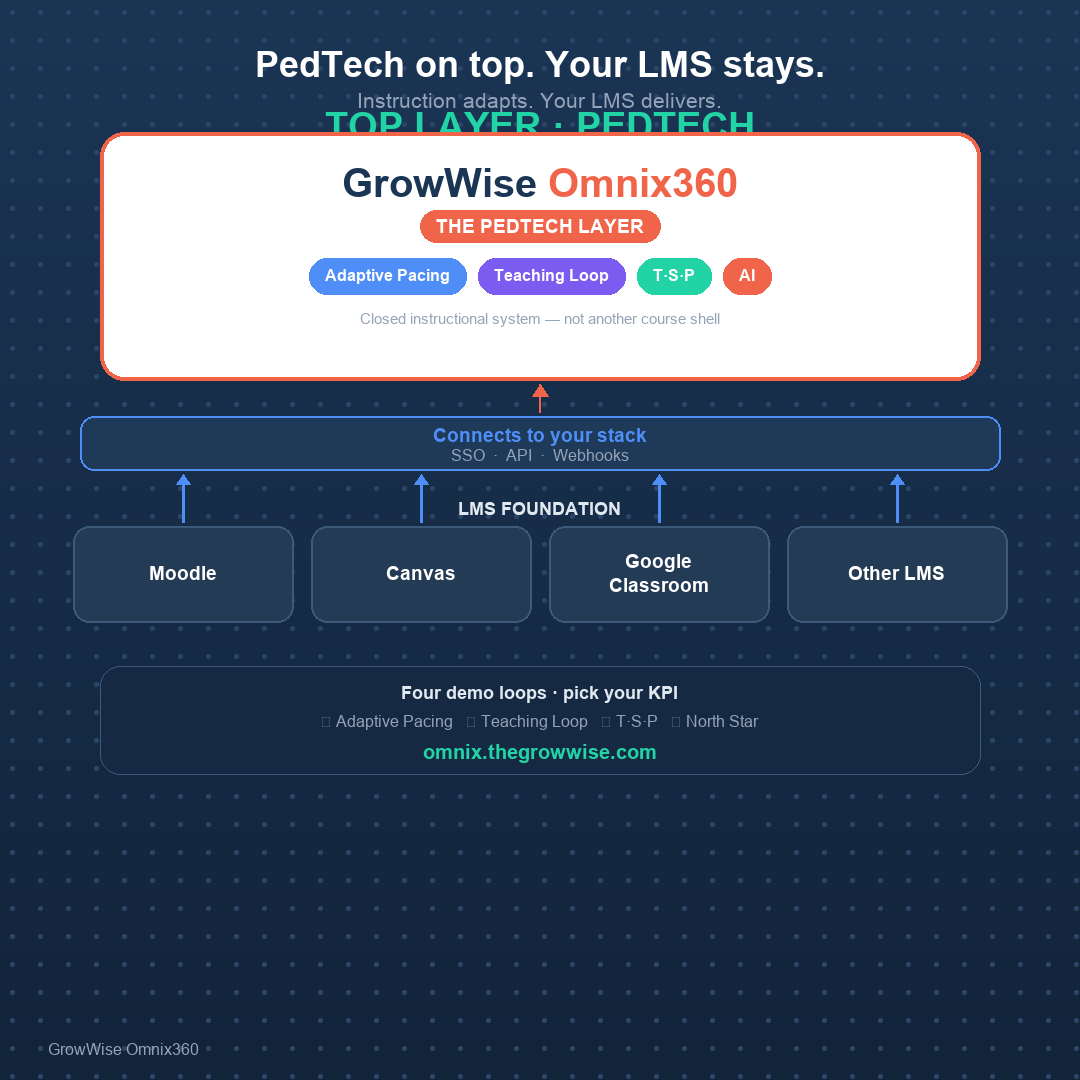
Illustrative only. Your workspace reflects your curriculum and roster.
Related reading
- Tutoring management software vs LMS vs instructional intelligence
- How to choose an instructional intelligence platform
- How to run a tutoring technology pilot with clear success metrics
- How AI can support tutors without becoming a student chatbot
Compare features, pricing, and Omnix360 vs. your LMS, or book a live demo with your curriculum and roster structure in mind.
Frequently asked questions
- What is the difference between an LMS and instructional intelligence?
- An LMS mainly hosts content, assignments, and gradebook entries. Instructional intelligence connects curriculum pacing, assessment evidence by topic or standard, and early signals so leaders can act before the term ends.
- Do tutoring centers need an LMS?
- Many centers need scheduling, billing, and content delivery, but an LMS alone rarely shows whether every tutor is on pace or whether students mastered the last topic before moving on.
- Can instructional intelligence replace my LMS?
- Often it complements or replaces the instructional layer. Centers still need operations tools, but the question is whether grades and folders are enough to run quality at scale.
- What should private schools evaluate first when comparing platforms?
- Start with whether the platform shows pacing drift and mastery gaps across sections and campuses, not just whether teachers can upload files and post grades.
Ready to prove pacing alignment in one program?
Start with the pilot playbook, then scope one program with our team, pricing comes after the scorecard.